

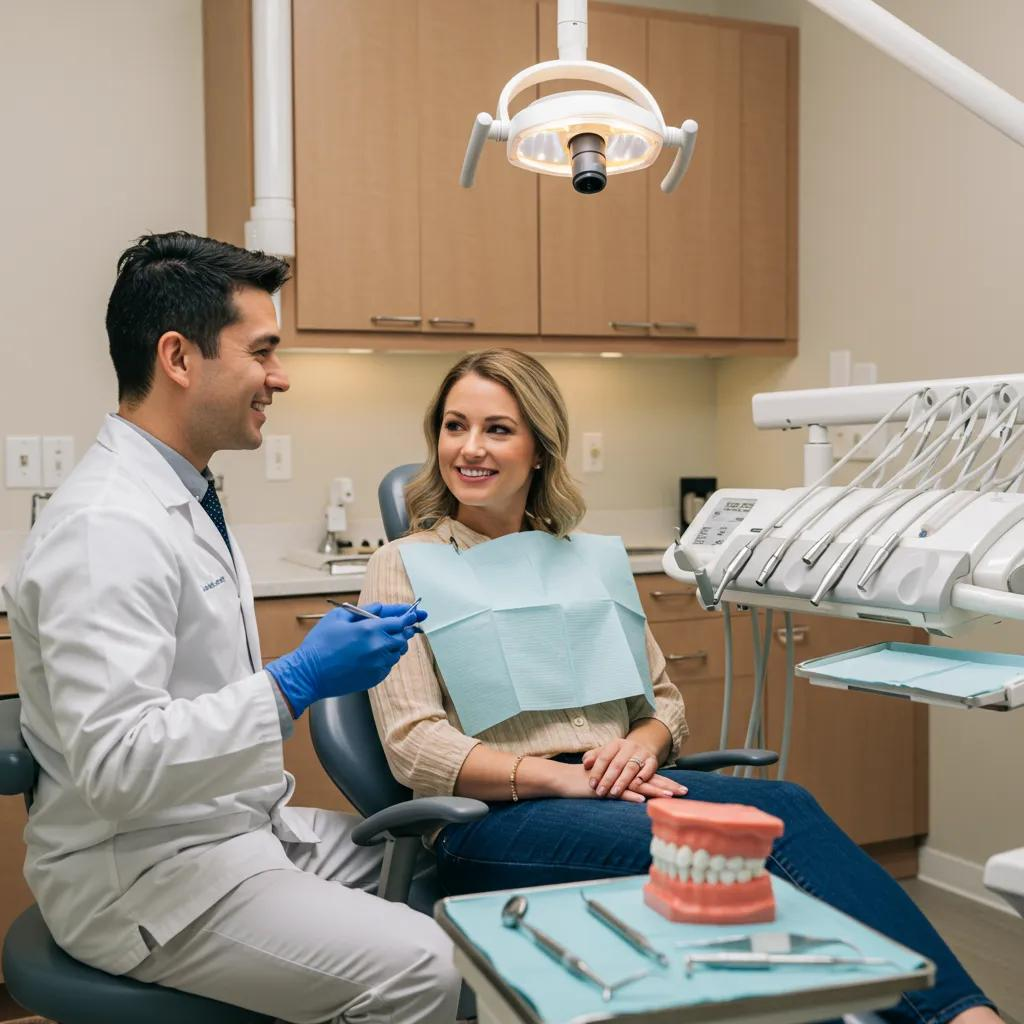
Dental Implant Consultation: What to Expect
A dental implant consultation is a focused appointment where a dentist or oral surgeon evaluates your oral health, reviews imaging, and outlines a step-by-step plan to replace missing teeth. This article explains what to expect during a dental implant consultation in Lutz, how clinicians assess candidacy, typical diagnostics such as CBCT, financing options, and how to prepare for your visit. Readers will gain clear next steps—what questions to bring, what imaging reveals, and how treatment timelines are usually sequenced—so the consultation delivers actionable answers rather than uncertainty. We'll cover the consultation flow, how personalized treatment plans are developed, common cost drivers and financing partners used locally, practical preparation checklists, and reasons patients choose Bespoke Dental in Lutz. Throughout, targeted terms like dental implant consultation Lutz, CBCT dental implant Lutz, and dental implant candidacy Lutz are woven into concrete guidance to help you arrive informed and ready to make decisions.
What Happens During a Dental Implant Consultation in Lutz?
A dental implant consultation begins with a focused oral exam, a review of medical history, and diagnostic imaging to determine implant candidacy and immediate next steps. This combination of assessment, imaging, and discussion establishes candidacy, identifies whether preparatory care (like periodontal treatment or bone grafting) is needed, and results in a provisional timeline and cost overview. The consultation’s immediate benefit is clarity: you'll leave knowing whether you are a candidate and what the recommended path looks like. Below is a concise step list that mirrors what many Lutz practices follow and what you can expect to be covered during the visit.
- A brief medical and medication review to identify systemic factors affecting healing.
- An intraoral exam to check gum health, existing restorations, and infection.
- Imaging (X-rays or CBCT) to measure bone height and locate nerves.
- A discussion of treatment options, timeline, and estimated next steps.
This stepwise approach reduces uncertainty and prepares you for the next phase: specific diagnostic details that guide implant placement precision.
How Is Your Oral and Medical Health Assessed?
The oral and medical assessment identifies factors that influence implant success by combining medical history with a targeted clinical exam. Clinicians ask about medications, chronic conditions such as diabetes or smoking history, and prior surgeries because these affect osseointegration and healing. The intraoral exam then evaluates gum health, pocket depths, existing fillings, and mobility of adjacent teeth to spot infections or periodontal disease that require treatment beforehand. Understanding these elements allows the team to recommend preparatory therapies when needed and to explain realistic timelines for achieving implant readiness.
Patient Assessment and Diagnosis for Dental Implant Treatment
As with any dental treatment procedure, a thorough patient assessment is essential prior to treatment planning including dental implants. The literature suggests that the following criteria were met: (1) information concerning implant
Patient assessment and diagnosis in implant treatment, NU Zitzmann, 2008
What Advanced Imaging and Diagnostics Are Used?
Advanced imaging, particularly 3D CBCT scans and periapical X-rays, provides a three-dimensional map of jawbone density, nerve locations, and sinus anatomy, enabling precise implant planning. CBCT imaging shows bone volume and quality, which determines implant diameter and length, and identifies when bone grafting or sinus lifts are necessary. Digital impressions or intraoral scans capture topography for crown planning and prosthetic design, linking surgical planning to the final restoration. These diagnostics together lower surgical risk and improve long-term predictability for implant placement.
Dental Imaging for Implant Planning: CT/CBCT Advantages
Another distinct advantage of CT/CBCT scan is the ability to plan implant therapy virtually. The use of 3D imaging allows for the visualization of anatomical structures, such as nerves and sinuses, which is crucial for safe implant placement. Model-based treatment planning with the assistance of CT images has become an integral part of modern dental implantology, enabling clinicians to preoperatively determine the optimal position, angulation, and depth of the implant.
Dental imaging in implant treatment planning, HL Chan, 2010
CBCT scans offer a more detailed view than traditional panoramic X-rays, which can be beneficial for precise implant placement. The ability to visualize anatomical structures in 3D is crucial for safe and effective surgical planning.
CBCT vs. Panoramic Images for Dental Implant Planning
CBCT-pan than in D-PAN images. It may be suggested that in case that a CBCT is required for the preoperative implant planning, the panoramic image could display the mesio-distal view.
Planning of dental implant size with digital panoramic radiographs, CBCT‐generated panoramic images, and CBCT cross‐sectional images, R Spin‐Neto, 2014
How Is Your Dental Implant Eligibility Determined?
Eligibility is determined by a short checklist combining clinical findings and diagnostic imaging to confirm healthy gums, adequate bone volume, and controlled systemic conditions. If periodontal disease or insufficient bone is present, clinicians typically recommend periodontal therapy or bone grafting as remedial steps prior to implant placement. The consultation will explain timelines for these preparatory procedures and how they alter the overall treatment schedule. If immediate implantation is not suitable, the team will outline interim options and monitoring plans to get you ready for future implant surgery.
DiagnosticPurposeWhat It Shows / Next StepsClinical examAssess soft tissue and occlusionReveals gum disease, infection, or bite issues that require treatment before implantsPeriapical X-rayLocal tooth/root detailsShows periapical pathology and adjacent tooth status; may guide immediate restorationsCBCT 3D scanEvaluate bone anatomy and vital structuresMaps bone volume, nerve/sinus location, and determines need for grafting or guided surgery
This table summarizes the diagnostics used to decide candidacy and immediate treatment steps. Together, imaging and exam findings form the basis for a personalized plan.
How Is Your Personalized Dental Implant Treatment Plan Developed?
A personalized treatment plan is built by combining your clinical goals, exam findings, and imaging to select implant type, sequence, and timing that best fits your needs. The process links desired outcomes—single tooth restoration or full-arch function—with technical choices such as implant size, grafting needs, and whether guided surgery is appropriate. The plan explicitly states phases, typical healing periods for osseointegration, and scheduled prosthetic steps so patients understand each milestone. Below is a compact comparison of common implant approaches to clarify which options are discussed during planning.
- Single implants for replacing one tooth with a crown.
- Multiple implants for adjacent missing teeth or implant-retained bridges.
- Full-arch solutions like All-on-4 for comprehensive fixed restorations.
What Types of Dental Implants Are Discussed?
Clinicians discuss several implant types: single dental implants for isolated tooth loss, multiple implants for spans or bridges, All-on-4 full-arch concepts for patients missing many teeth, and mini implants for specific stabilizing roles. Each choice is a hyponym within the broader category of tooth replacement options and is selected based on bone availability, esthetic needs, and budget considerations. The consultation explains benefits and limitations—such as how All-on-4 reduces the number of implants for full-arch support versus individual implants that preserve adjacent tooth structure. This targeted comparison helps patients focus follow-up questions and set realistic expectations.
Implant TypeUse Case / CandidateTimeline / Typical StepsSingle implantOne missing tooth, good boneExtraction/healing → implant placement → osseointegration (~3-4 months) → crown placementAll-on-4Multiple missing teeth, seeking fixed archPlanning and CBCT → implant and provisional prosthesis → healing → final prosthesis (2-6 months)Mini implantTemporary stabilization or narrow ridgesFaster, less invasive placement → provisional use, sometimes as interim solution
This table clarifies typical uses and sequencing to guide patient expectations about time and phases.
How Is the Treatment Timeline Explained?
Timelines are explained in phases—planning, surgery, healing (osseointegration), and final restoration—with typical ranges given for each phase and factors that may extend them. For straightforward single implants, expect planning and imaging, surgery, a 3–4 month healing window for osseointegration, and then crown placement. Preparatory treatments like bone grafting or sinus lifts add weeks to months for graft integration before implant placement. The consultation outlines follow-up visits, expected discomfort windows, and key recovery milestones so patients can plan work, travel, and finances.
What Should You Know About Dental Implant Costs and Financing in Lutz?
Cost drivers for implants include the number of implants, need for bone grafting or sinus lift, type of restorative material, lab fees, and whether guided planning or sedation is used. Consultation fees may be separate from surgical and restorative fees; the consultation is the time to request an itemized estimate and to clarify what each phase covers. Many local patients ask about financing to spread costs, so clinicians will often present third-party options and explain application steps. Below is an EAV table offering typical cost items alongside financing notes to aid comparison.
- Ask during consultation for an itemized estimate covering consultation, surgery, grafting, implants, and crowns.
- Clarify whether imaging and provisional restorations are included in surgical fees.
- Request a timeline tied to payment milestones so costs align with treatment phases.
These cost-related points help patients plan financially and avoid surprises during multi-phase implant care.
How Are Consultation and Procedure Costs Explained?
During the consultation the team breaks costs into components—diagnostics, surgical placement, grafting if needed, and final restorations—so patients understand what each phase costs and why. Clinicians recommend asking for itemized estimates, potential additional fees, and how warranties or follow-up care are handled. This transparency helps patients compare options, seek second opinions, or arrange financing before committing to surgery. The consultation also clarifies whether any provisional prosthesis is included and which materials affect long-term costs.
ItemTypical Cost RangeFinancing Options / NotesConsultation & imaging$100–$400Often applied to treatment if you proceed; ask your providerSingle implant (surgery)$1,500–$3,000Financing can cover surgical fees; verify terms with lenderFull-arch restoration$15,000–$30,000+Larger loans or multi-option financing common for full-arch care
What Financing Options Are Available at Bespoke Dental?
Bespoke Dental works with several third-party financing partners to help patients manage implant costs, and these options are explained during the consultation. Common providers used include Sunbit, Cherry, Alpheon Credit, CareCredit, and LendingClub, each offering different term lengths and application processes. During your consult, the office staff can outline eligibility steps, typical down payment expectations, and monthly payment examples without committing you to any lender. This factual overview helps patients plan payments and choose the option that best fits their budget.
How Can You Prepare for Your Dental Implant Consultation?
Preparing makes the consultation more productive by ensuring the team has the clinical and medical context needed to form a plan quickly. Bring recent dental records or X-rays if available, a complete medication list, and any relevant medical records about chronic conditions. Practical logistics like arranging transportation if sedation is possible and fasting instructions (if applicable) should be clarified when booking. The checklist below captures the most useful items to bring and actions to take before arriving.
- Recent dental X-rays or electronic records transferred from your previous dentist.
- A written list of current medications, supplements, and medical conditions.
- Insurance information and any notes about interest in financing or payment plans.
What Documents and Information Should You Bring?
Bring recent dental X-rays, a comprehensive medication list, and notes on medical history to streamline the evaluation of implant candidacy. If you have prior CBCT or intraoral scans, bringing those files or asking your previous provider to send them can avoid repeat imaging. Also prepare a list of specific functional or esthetic goals to guide the planning conversation. Having this documentation ready helps the team produce a faster, more accurate treatment plan and estimate.
What Questions Should You Ask During Your Consultation?
Arrive with prioritized questions to ensure the consultation covers success rates, alternatives, timeline, pain control, and long-term maintenance responsibilities. Ask about expected recovery, how preparatory treatments affect timing, the materials used for crowns, and contingency plans if grafting is needed. Inquire about financing steps, itemized costs, and follow-up schedules to align medical and practical expectations. These questions empower you to compare options and choose the path that best fits your goals.
Why Choose Bespoke Dental for Your Dental Implant Consultation in Lutz?
Bespoke Dental in Lutz offers local implant consultations supported by clinicians experienced in implant surgery and oral surgery, providing a coordinated approach to diagnosis, planning, and restoration. The practice emphasizes use of advanced diagnostics such as CBCT and digital planning to improve accuracy and predictability while offering practical appointment options, including online booking. For local patients, trust signals include the clinic name, street address at 18713 N Dale Mabry Hwy, Lutz, FL 33548, and a direct phone contact at (813) 807-4902 for scheduling and questions. These concrete details help patients connect consultation expectations with a specific local provider.
Who Are the Implant Specialists at Bespoke Dental?
Our lead implant specialist is Dr. Tarik Elmohd, a board-certified oral surgeon with expertise in dental implants and facial trauma. During a consultation one or both clinicians may participate depending on case complexity, bringing surgical and restorative perspectives to the planning conversation. Team bios and online booking options are available through the practice so prospective patients can review clinician roles and book appointments that match their needs. This clinician pairing supports coordinated care from consultation through restoration.
How Does Bespoke Dental Use Advanced Technology for Implant Planning?
Bespoke Dental uses CBCT imaging and 3D digital planning to identify bone volume, nerve courses, and optimal implant positions, which increases surgical safety and prosthetic outcomes. Digital workflows enable guided implant placement and precise communication between surgical and restorative teams, reducing surprises and improving consistency. Patients are encouraged to ask to view their images during the consultation so they understand the anatomy driving treatment recommendations. Seeing the planning visuals helps patients make informed choices about implant type, timing, and expected results.
Frequently Asked Questions
What are the potential risks associated with dental implants?
While dental implants are generally safe, there are potential risks involved, including infection at the implant site, nerve damage, and sinus issues, particularly with upper jaw implants. Other complications may include implant failure due to insufficient bone density or improper placement. It's essential to discuss these risks with your dentist during the consultation, as they can provide tailored advice based on your specific health profile and the complexity of your case.
How long does the entire dental implant process take?
The duration of the dental implant process can vary significantly based on individual circumstances. Typically, the process includes several phases: initial consultation, diagnostic imaging, implant placement, healing (osseointegration), and final restoration. For straightforward cases, this can take anywhere from 5 to 8 months. However, if preparatory treatments like bone grafting are needed, the timeline may extend further. Your dentist will provide a more accurate estimate during your consultation.
Can dental implants be placed immediately after tooth extraction?
In some cases, dental implants can be placed immediately after tooth extraction, a procedure known as immediate implant placement. This approach is suitable for patients with sufficient bone density and healthy gums. However, it may not be appropriate for everyone, especially if there is an infection or significant bone loss. Your dentist will evaluate your specific situation during the consultation to determine the best timing for your implant placement.
What is the success rate of dental implants?
The success rate of dental implants is generally high, ranging from 90% to 95% over a 10-year period. Factors influencing success include the patient's overall health, oral hygiene practices, and the quality of the bone where the implant is placed. Patients who follow post-operative care instructions and maintain regular dental check-ups tend to experience better outcomes. Discussing your individual risk factors with your dentist can provide more personalized insights.
Are there alternatives to dental implants for tooth replacement?
Yes, there are several alternatives to dental implants for tooth replacement, including dental bridges and dentures. Dental bridges involve anchoring a false tooth to adjacent teeth, while dentures can replace multiple missing teeth. Each option has its pros and cons, such as cost, longevity, and maintenance requirements. Your dentist can help you weigh these alternatives based on your specific needs, preferences, and budget during the consultation.
How do I maintain my dental implants after placement?
Maintaining dental implants is similar to caring for natural teeth. Regular brushing and flossing are essential to prevent plaque buildup and gum disease. Additionally, routine dental check-ups are crucial for monitoring the health of the implant and surrounding tissues. Avoiding tobacco products and maintaining a balanced diet can also enhance the longevity of your implants. Your dentist will provide specific care instructions tailored to your situation during your consultation.
What should I expect during the recovery period after implant surgery?
After dental implant surgery, patients can expect some swelling, discomfort, and minor bleeding, which typically subsides within a few days. Pain management can be achieved with prescribed medications or over-the-counter pain relievers. It's important to follow your dentist's post-operative care instructions, which may include dietary restrictions and activity limitations. Regular follow-up appointments will help ensure proper healing and address any concerns that may arise during recovery.
Conclusion
Understanding the dental implant consultation process in Lutz empowers patients to make informed decisions about their oral health. By clarifying eligibility, treatment options, and financing, you can approach your dental journey with confidence and clarity. Take the next step towards restoring your smile by scheduling your consultation with Bespoke Dental today. Experience personalized care and advanced technology that prioritizes your needs and goals.